NANJING · CHINASUNUSER · UV+86 173 6609 8295

Materials

UV printing material guide

Surface energy, absorption, coatings and end-use conditions all affect adhesion. This guide groups the testing priorities from our application notes.
!

Test cleaning, pretreatment, adhesion and durability for every new material or batch before production.

Glass & ceramic
01

Glass & ceramic

Smooth non-absorbent surfaces; test cleaning, primer, white ink and adhesion.

Selection logic
Smooth non-absorbent surfaces; test cleaning, primer, white ink and adhesion.
How to make it work
Clean and compare primer options, then test white opacity, cross-hatch adhesion and wipe resistance.
Verify during sampling
Test cleaning, pretreatment, adhesion and durability for every new material or batch before production.
View selection process ↗
Metal & identification
02

Metal & identification

Aluminium, steel, iron and copper coatings vary; test adhesion and durability separately.

Selection logic
Aluminium, steel, iron and copper coatings vary; test adhesion and durability separately.
How to make it work
Identify each metal and coating, compare cleaning or primer, then test cross-hatch, bending and end-use exposure.
Verify during sampling
Test cleaning, pretreatment, adhesion and durability for every new material or batch before production.
Read the metal testing guide ↗
Wood & boards
03

Wood & boards

Porosity, coating and moisture affect ink and colour; sealing may be required.

Selection logic
Porosity, coating and moisture affect ink and colour; sealing may be required.
How to make it work
Check moisture, porosity and coating; seal when needed, then verify colour, adhesion and warp.
Verify during sampling
Test cleaning, pretreatment, adhesion and durability for every new material or batch before production.
Read the wood and board guide ↗
Plastics & acrylic
04

Plastics & acrylic

Resins and coatings differ; PP, PE and silicone especially need pretreatment trials.

Selection logic
Resins and coatings differ; PP, PE and silicone especially need pretreatment trials.
How to make it work
Identify the resin and finish; trial flame or dedicated primer on PP, PE or silicone, then test flex and tape peel.
Verify during sampling
Test cleaning, pretreatment, adhesion and durability for every new material or batch before production.
Read the acrylic testing guide ↗
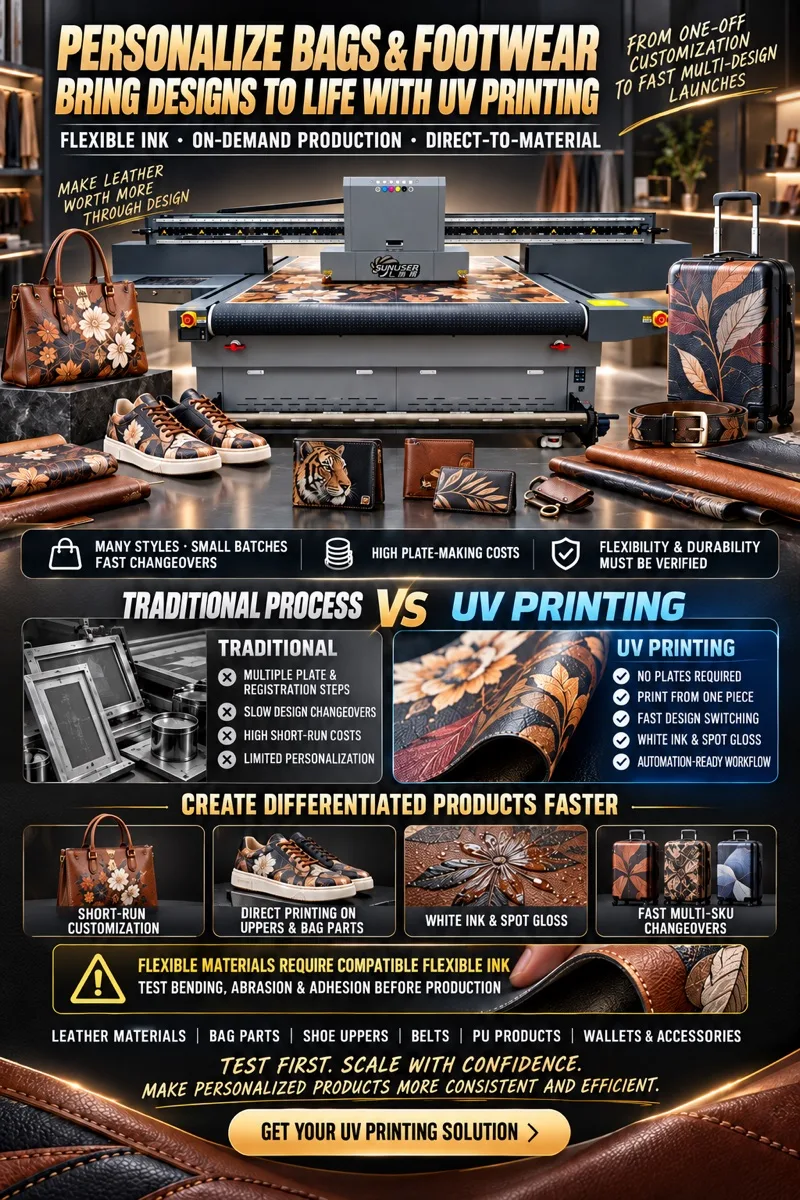
Leather & textiles
05

Leather & textiles

Flexing, texture and absorption affect the ink layer; test feel, cracking and rub resistance.

Selection logic
Flexing, texture and absorption affect the ink layer; test feel, cracking and rub resistance.
How to make it work
Group by flexibility, texture and absorption, compare ink flexibility, then test repeated bending, rub and feel.
Verify during sampling
Test cleaning, pretreatment, adhesion and durability for every new material or batch before production.
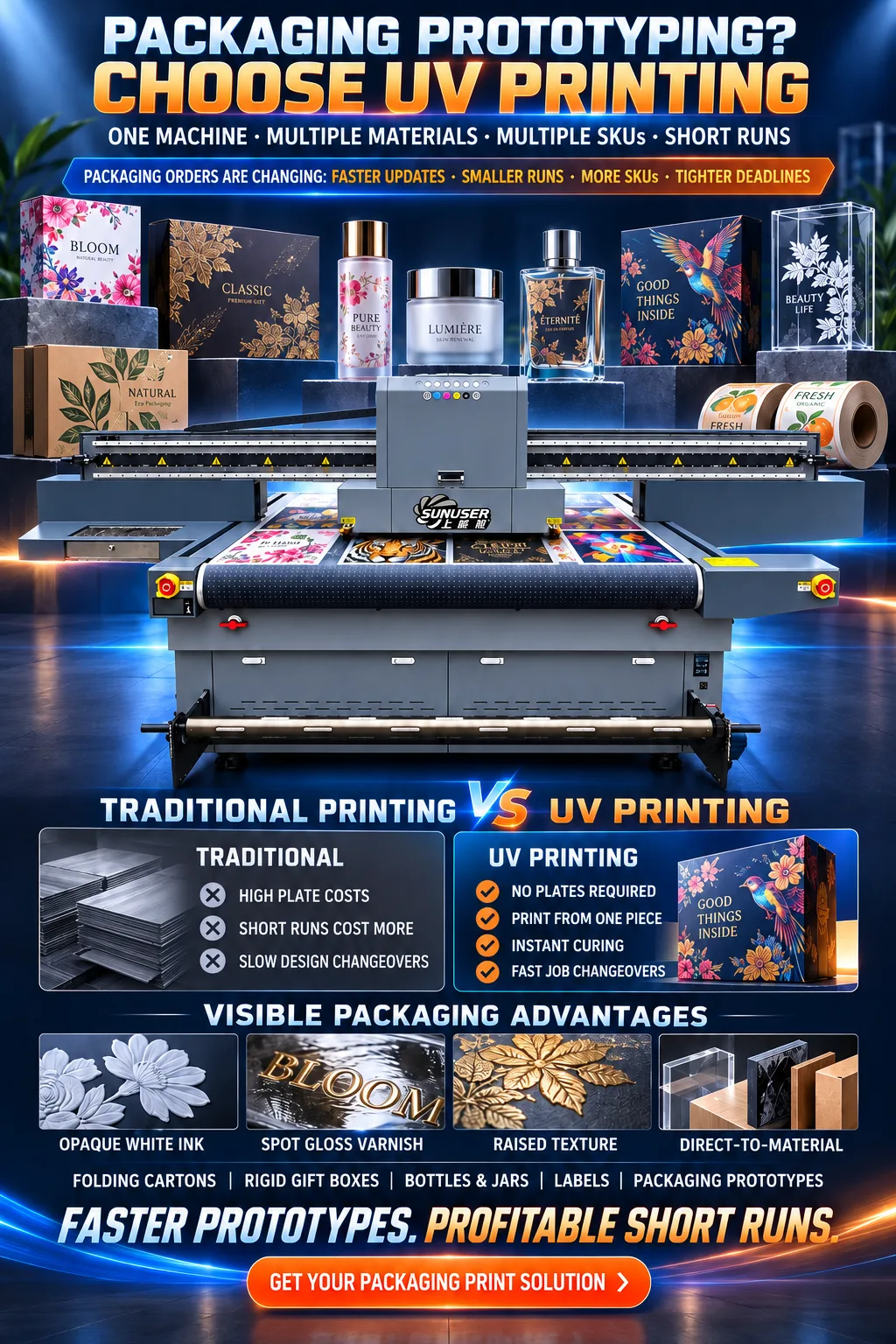
Paper & packaging
06

Paper & packaging

Paper, card and corrugated media require checks for absorption, warp, holding and end use.

Selection logic
Paper, card and corrugated media require checks for absorption, warp, holding and end use.
How to make it work
Check absorption, dust and warp, choose hold-down, then validate through the actual folding, cutting or packing process.
Verify during sampling
Test cleaning, pretreatment, adhesion and durability for every new material or batch before production.
Shaped & small parts
07

Shaped & small parts

Shape, reflection, placement and fixtures determine positioning; test a real batch.

Selection logic
Shape, reflection, placement and fixtures determine positioning; test a real batch.
How to make it work
Provide a real batch and placement pattern; test contour limits, reflection, occlusion and repeated changeovers.
Verify during sampling
Test cleaning, pretreatment, adhesion and durability for every new material or batch before production.
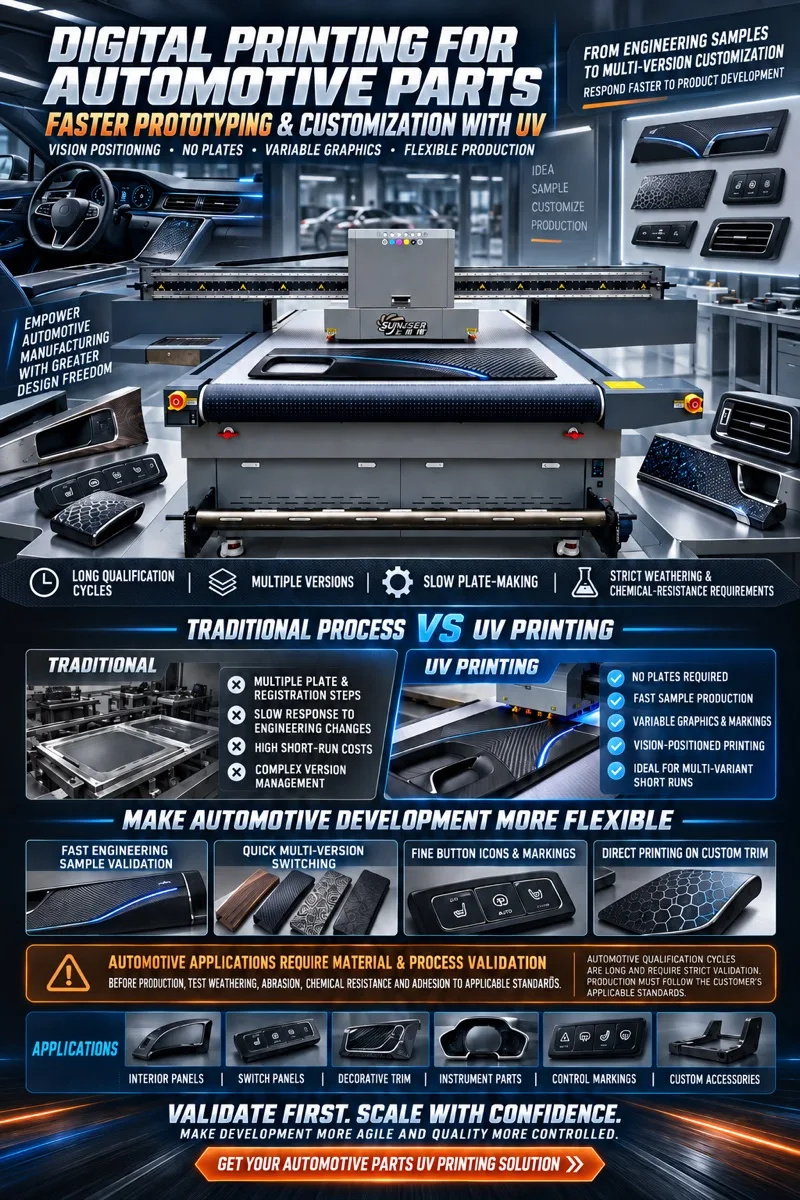
Industrial & automotive parts
08

Industrial & automotive parts

Mixed materials, curves and durability require end-use-specific acceptance tests.

Selection logic
Mixed materials, curves and durability require end-use-specific acceptance tests.
How to make it work
Define curves, height variation and end use, design the fixture, then verify clearance, registration, wear and batch consistency.
Verify during sampling
Test cleaning, pretreatment, adhesion and durability for every new material or batch before production.

Contact

Send your material and job to Jason Huang

Include photos, maximum size, thickness, batch quantity, target finish and daily output.View service policy ↗